  |
  |
|||
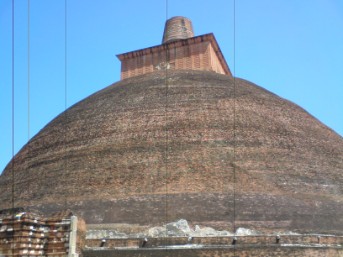
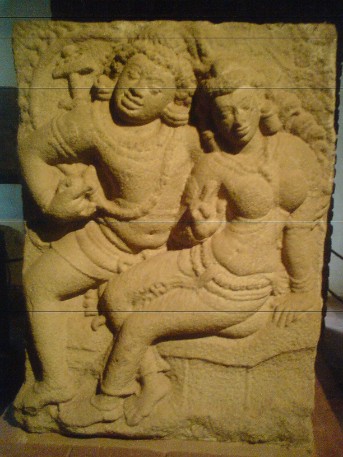
Anuradhapura(c. 3rd century BC–10th century AD) Sinhalese kingdom centred at Anuradhapura in Sri Lanka. Though plagued by invasions from southern India (which took actual control of the kingdom several times) and internal strife among warring clans, the kingdom of Anuradhapura developed a high degree of culture. Its complex irrigation system is often considered its major achievement. The modern city of Anuradhapura (pop. 2001 prelim.: 56,632) contains vast Buddhist ruins and a bo tree grown from a slip of the tree under which the historical Buddha is said to have reached Enlightenment. Isurumuni Lovers 6th Century Gupta style carving. The woman, seated on the man's lap, lifts a warning finger, probably as a manifestation of her coyness; but the man carries on regardless. The figures may represent Dutugemunu's son Saliya and the law caste (Sadol Kula) maiden Asokamala whom he loved. It's known that he gave up the throne for her. ‘Siddha mahayaha kuni – maha (la) ka Asala yaha (di) ni’ [Hail! The cell of Mahaya is given to Venerable Asalaya] The above Brahmi inscription was inscribed at the original place where the Isurumuniya Lovers were originally sculptured and placed. It is a special one as a letters in this inscription is 3 inches x 4 inches in size. After donating Vessagiriya to Maha Sangha this sculpture would have been removed and placed at its present place. The Lovers in the sculptured plaque are King Kuvera Vaisrawana and his Queen Kuni. Ramayana states that Vaisrawana who lived in Vessagiriya ruled Sri Lanka from Lankapura before Rawana. (Refer Sri Lanka Rawana Rajadhaniya – Ariyadasa Seneviratna Chapter 9) Jetavanaramaya The Jetavanaramaya is a stupa, located in the ruins of Jetavana Monastery in the sacred world heritage city of Anuradhapura, Sri Lanka. King Mahasena (273-301 AD) initiated the construction of the stupa following the destruction of Mahavihara, his son Maghavanna I completed the construction of the stupa.[1] A part of a sash or belt tied by the Buddha is believed to be the relic that is enshrined here. The structure is significant in the island's history for it represents the tensions within the Theravada and Mahayana sects of Buddhist monks, it is also significant in world history as one of the tallest structures in the ancient world[2][3]. The height of the stupa is 122 m and was the tallest ancient stupa in the world, the structure is no longer the tallest however it is the largest with a volume of 233,000 m3. At the time of its completion the structure was the third tallest structure in the world behind the Great Pyramids of Giza.[2] Approximately 93.3 million baked bricks were used in its construction, the engineering ingenuity behind the construction of the structure is a significant development in the history of the island. The sectarian differences between the Buddhist monks also are represented by the stupa as it was built on the premises of the destroyed Mahavihara, which led to a rebellion by a minister of king Mahasena. This stupa belongs to the Sagalika sect. The compound covers approximately 5.6 hectares and is estimated to have housed 10,000 Buddhist monks. One side of the stupa is 576 feet (176 m) long, and the flights of stairs at each of the four sides of it are 28 feet (8.5 m) wide. The doorpost to the shrine, which is situated in the courtyard, is 27 feet (8.2 m) high. The stupa has a 8.5 m deep foundation, and sits on bedrock. Stone inscriptions in the courtyard give the names of people who donated to the building effort. |
||||
